

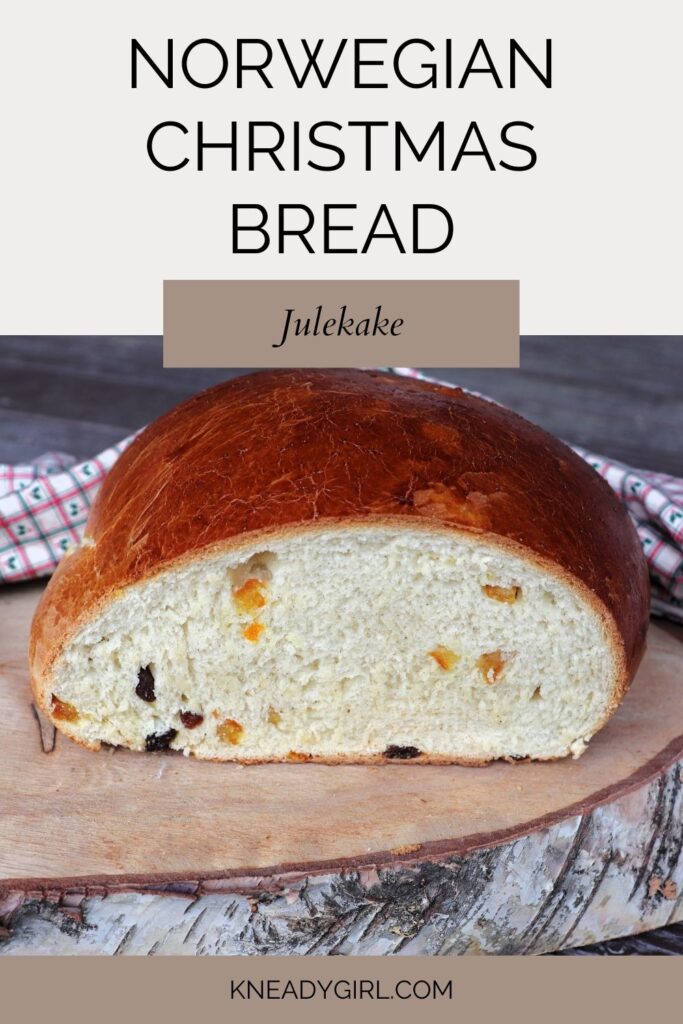
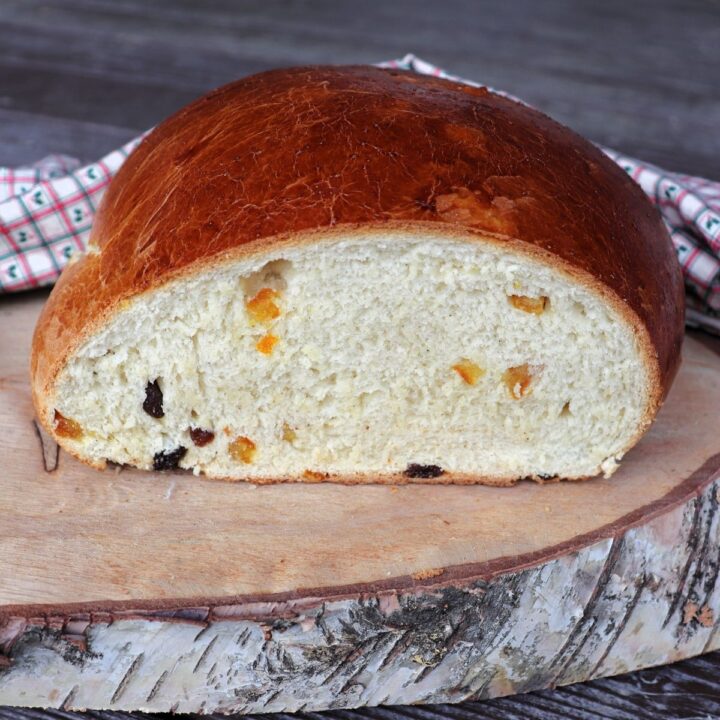
Julekake is a traditional Norwegian Christmas bread, rich with cardamom, raisins, and candied orange peel. It’s a sweet, lightly spiced enriched loaf with a tender crumb and a golden egg-washed crust. The kind of bread that makes the whole house smell like the holidays.
While it’s traditionally baked for Christmas, it’s honestly good enough to serve any time you want something special.
What Is Julekake?
Julekake (pronounced yoo-leh-kah-keh) is Norway’s traditional Christmas bread. The name translates roughly to “Christmas cake” in Norwegian. It’s an enriched yeasted bread, meaning it contains butter, eggs, and milk, which gives it a soft, slightly sweet texture similar to brioche or challah. Cardamom is the signature spice, and dried or candied fruit is folded into the dough for bursts of sweetness throughout.
It has been baked in Norwegian homes for generations and is closely associated with the Christmas season, often served at breakfast or as an afternoon treat alongside coffee.
A Holiday Tradition
My husband’s family is of Norwegian descent and I wanted to make sure I included some of those Christmas baking traditions alongside the beloved Potica baking of my childhood.
I live in area where many folks from Scandinavian countries settled meaning my library is full of cookbooks that I used to help me form a Julekake recipe that at least resembles the traditional loaves.
I used what seemed to be the most common ingredients while also making the recipe fit into my life and kitchen habits. The result is a rich holiday bread that is sure to please.
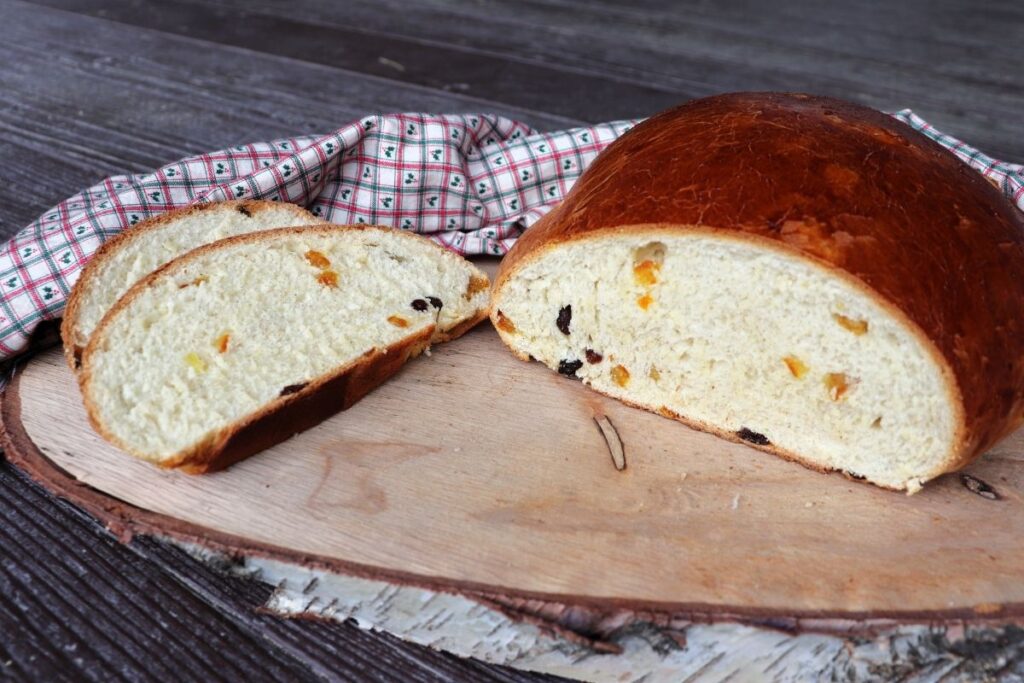
Dried Fruit
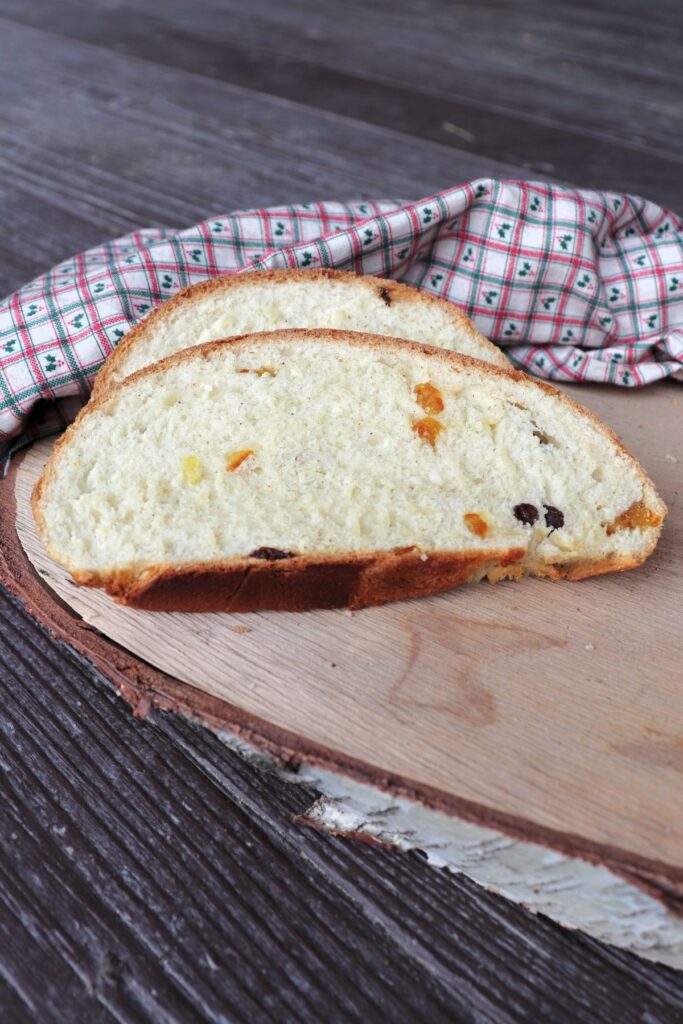
Like most holiday breads this Norwegian version contains dried fruit. I used raisins which seem to be fairly traditional.
Golden raisins would also work and be lovely, I just don’t usually have them on hand.
Other dry fruits could likely be substituted with great success. Things like dried cranberries or chopped bits of dried apples would work.
If you enjoy baking with raisins, my cinnamon raisin challah is another enriched, egg-based bread worth trying.
Candied Fruit
Candied citron is often used in the traditional recipes. It’s a very specific kind of candied peel that I couldn’t find in my local grocery store.
I opted to use candied orange peels in my recipe because my husband likes to eat oranges and so I made some candied peel from his snacks.
Now candied orange peel can often be purchased, my local store didn’t have any options that weren’t coated in high fructose corn syrup which isn’t an option I feel good about using. If you can find something you like certainly buy it.
If you can’t buy it, making it takes a little time but isn’t at all difficult.
Spice
Cardamom seemed to be the spice used most often in all the various research I did. I opted to use it entirely and I’m glad I did because it’s truly incredible here with the orange peel and rich flavor.
I imagine you could substitute whatever spice or spice mix you prefer with ease.
Flour Choices
For ease, I used bread flour in the recipe below. All purpose flour could easily be substituted.
If you like a little whole grain in your bread recipes, substitute up to half of the bread flour with whole wheat flour.
Using a whole grain will make the bread denser, of course. And whole grain flours absorb water differently so add it slowly as you knead.
Loaf Shape
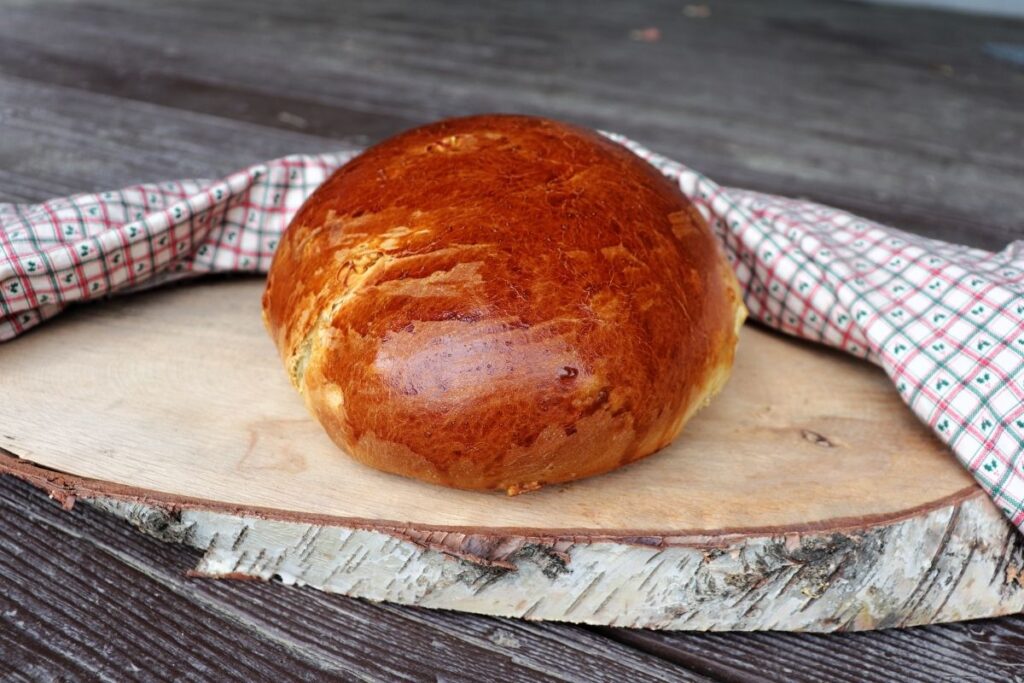
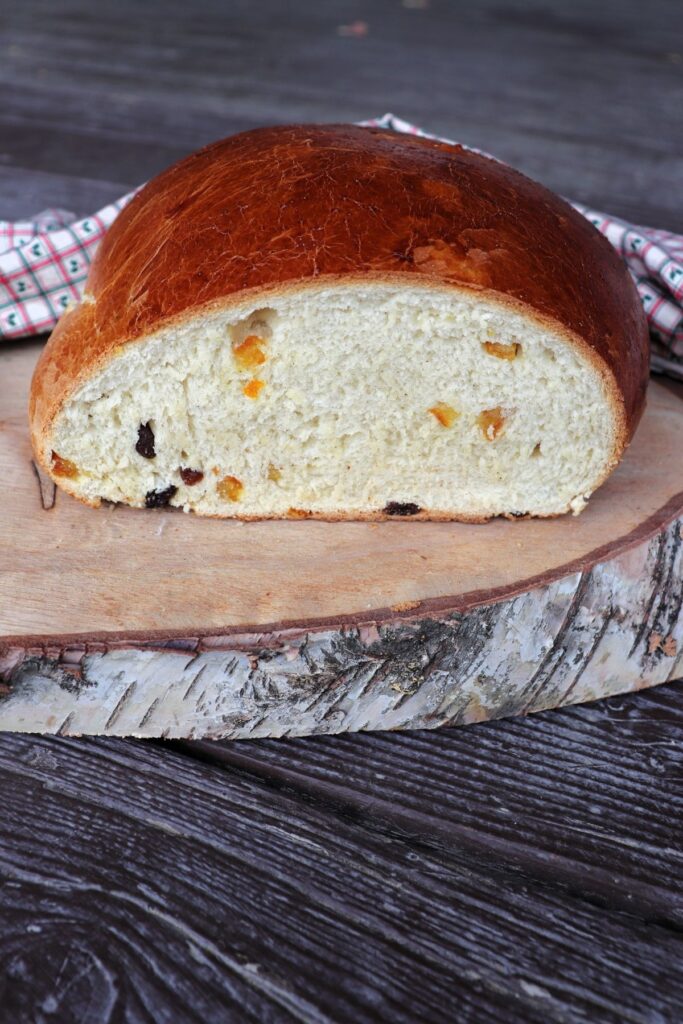
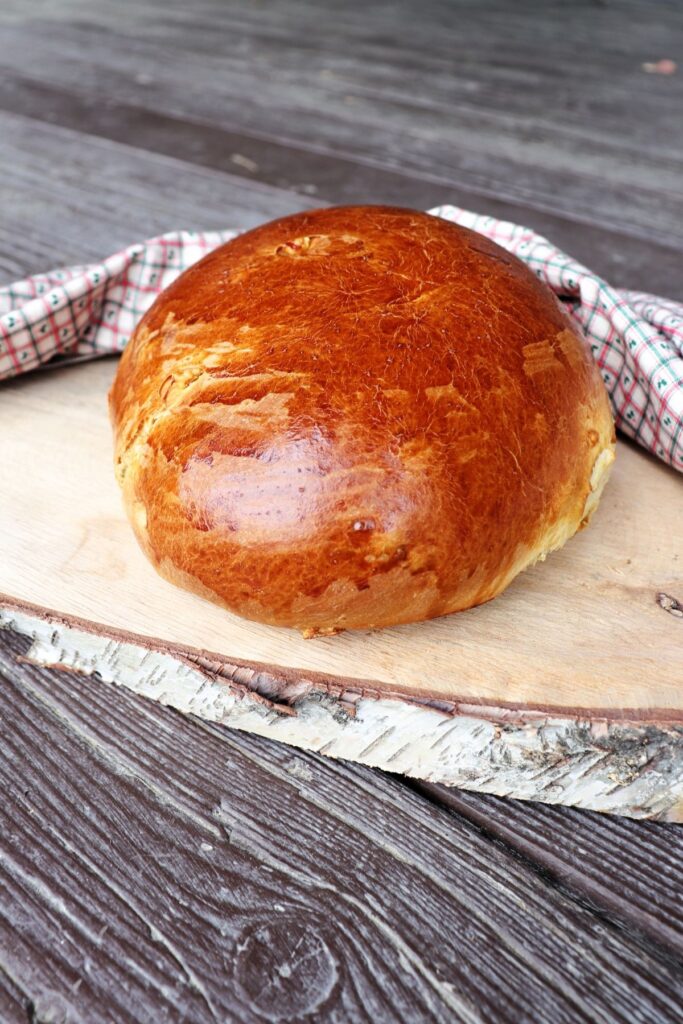
A large round loaf seems to be most traditional and honestly one of my favorite shapes for bread, so I stuck with that.
It would be a bit much to fit into a single bread pan but would make two small loaves if you wanted to stick with a loaf pan shape.
Divide the dough into buns if you’d like to serve the Julekake as rolls.
As always, if you change the shape be sure to watch the cooking time and check for doneness earlier and more often.
How to Serve
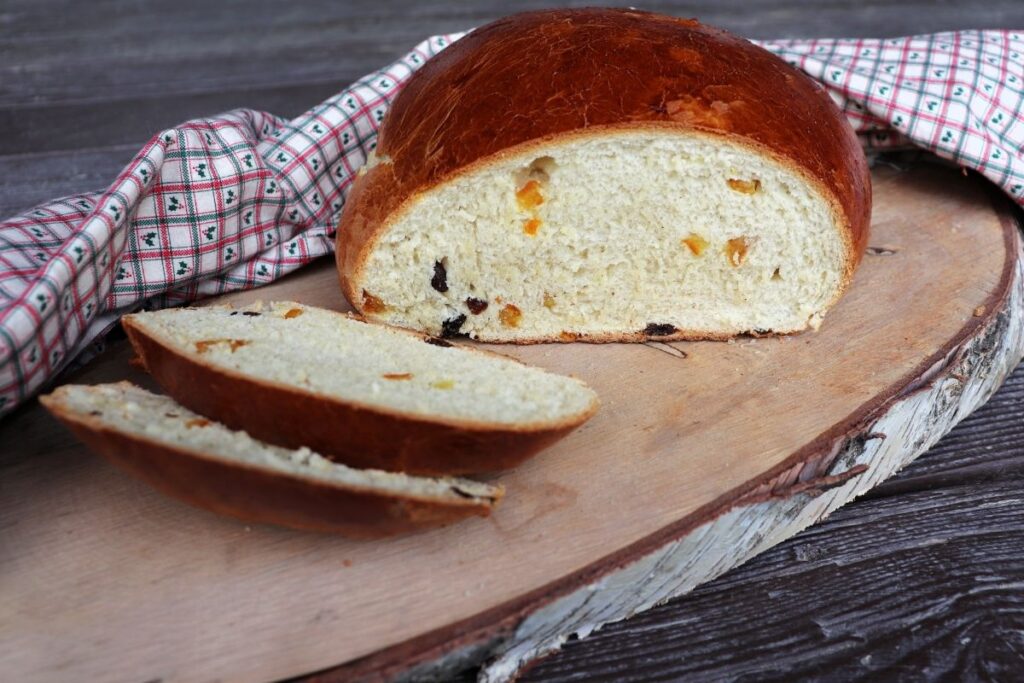
Cut this rich bread into thick slices and serve with butter, homemade jam, or honey alongside your favorite hot drinks for a simple snack or breakfast treat.
We quite like it toasted and slathered in almond butter.
Definitely serve as part of a holiday brunch buffet.
The slices do work well for a rich French toast, if desired.
How to Store
When kept in airtight container at room temperature, the loaf should stay fresh for up to 5 days.
For longer term storage, freeze the baked and cooled loaf in a plastic bag.
Alternatively, slice the baked and cooled loaf and place the slices in the freezer bag. This way you can simply pull out a few slices at a time, if desired.
Thaw frozen bread at room temperature prior to serving.
Use up any frozen bread within 6 months for best flavor.
Troubleshooting
The dough is very soft and sticky. This is an enriched dough with butter, egg, and milk, which makes it naturally softer than a plain bread dough. Resist the urge to add too much extra flour. The dough should feel soft and slightly tacky when properly kneaded, not stiff. Give it extra time before adding more flour.
The fruit sank to the bottom. Make sure the raisins and candied peel are folded in evenly during kneading rather than added all at once at the end. Tossing them lightly in a tablespoon of flour before adding can also help them stay distributed through the loaf.
The loaf didn’t rise well. Scalded milk must be cooled to around 115 degrees before adding the yeast. Milk that is too hot will kill the yeast. Check that the yeast foamed properly before proceeding. Enriched doughs are also naturally slower to rise than plain white doughs so give it the full time.
The crust is very dark before the center is done. The egg wash and the sugar in this dough can cause the crust to brown quickly. Tent the loaf loosely with foil partway through baking and continue until it sounds hollow when tapped or reaches an internal temperature of 190 degrees Fahrenheit.
The cardamom flavor is too strong. Cardamom is a potent spice and a full teaspoon is noticeable. Reduce to 1/2 teaspoon for a more subtle flavor. Ground cardamom also varies in intensity by brand so freshly ground is stronger than pre-ground that has been sitting in the cabinet.
The loaf is dense. Enriched doughs need a thorough knead to develop the gluten structure that supports the rise. Make sure the dough is smooth and elastic before the first rise, and that both rises are complete before baking.
Julekake Recipe
A traditional Norwegian Christmas bread made with cardamom, raisins, and candied orange peel. Rich, tender, and lightly sweet with a golden egg-washed crust. A beautiful holiday loaf worth every bit of the effort.
Ingredients
- 1 Cup Milk, scalded & cooled to 115 degrees Fahrenheit
- 1 1/2 teaspoons Active Dry Yeast
- 1/3 Cup Sugar
- 1 teaspoon Ground Cardamom
- 1 Egg
- 1/4 Cup Salted Butter, softened, cut into small pieces
- 1/3 Cup Raisins
- 1/3 Cup Candied Orange Peels / Citron
- 3 1/2 Cups Bread Flour
Instructions
- In a large bowl, combine the yeast, milk, and sugar. Let sit until foamy about 5-10 minutes.
- Add the cardamom, egg, and 1 cup flour. Mix gently.
- Add another cup of flour and butter. Mix until everything gets beaten well.
- Pour in the raisins and orange peel.
- Continue adding flour until everything comes together into a loose dough.
- Turn the dough out onto a floured board and knead until the dough is soft and elastic.
- Grease a bowl, place dough inside the bowl, turning to coat.
- Cover the bowl with a clean towel and let rise in a warm place until doubled, about 45 minutes to an hour.
- Grease a baking sheet or line with parchment paper / silicone baking mat.
- Punch down the dough and turn out to a floured surface.
- Knead the dough slightly and form dough into a large tight ball.
- Place dough onto prepared cookie sheet.
- Cover the sheet with a clean towel and let dough rise in a warm spot until doubled, 30-45 minutes.
- Meanwhile preheat oven to 350 degrees Fahrenheit.
- Beat the egg well.
- Brush the beaten egg wash over the top and sides of the dough, coating well.
- Bake in the preheated oven for 34-45 minutes or until golden brown and sounds hollow when tapped with a knuckle.
- Remove from cookie sheet immediately to cool on wire rack.
Nutrition Information:
Yield: 18 Serving Size: 1Amount Per Serving: Calories: 174Total Fat: 4gSaturated Fat: 2gTrans Fat: 0gUnsaturated Fat: 1gCholesterol: 18mgSodium: 32mgCarbohydrates: 31gFiber: 1gSugar: 10gProtein: 4g
I try but cannot guarantee this nutritional information is 100% accurate.

Our family usually braids our Christmas bread. Plus puts a sweet wash on the crust. it’s so good and festive. Our family Norwegian tradition.