


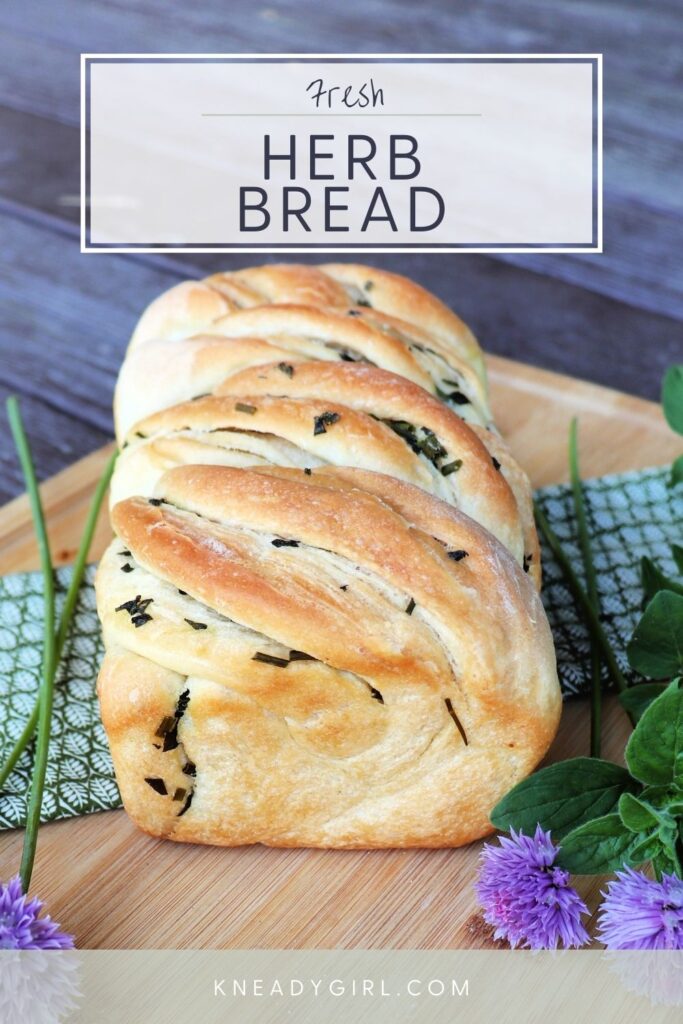
Show off the herb garden by making a loaf of fresh herb bread to share.
This easy homemade yeasted bread is filled with an herb butter that melts into every layer as it bakes — fragrant, savory, and beautiful on the dinner table. It’s one of my favorite things to make when the garden is producing more herbs than I know what to do with.
Make this great recipe with any combination of herbs that will complement your main dish and whatever is easily on hand.
Fresh from the Garden
The great thing about this easy recipe is that it can highlight whatever fresh herbs are growing in your garden right now. You can choose to spotlight just one herb like fresh rosemary, or use a mixture of aromatic herbs for something extra flavorful.
Match the herbs to what you plan to serve the bread alongside. Serving it with pasta? Make an Italian herb bread with basil, oregano, and parsley. Here are a few combinations that work especially well:
- Rosemary and thyme — classic, earthy, goes with almost everything.
- Basil and parsley — bright and fresh, perfect alongside pasta or salads.
- Chives and parsley — mild and versatile, a great all-purpose choice.
- Tarragon and chervil — elegant and slightly anise-flavored, wonderful with chicken dishes.
- Dill and chives — fresh and bright, especially good alongside fish or eggs.
Not sure what to use? Garlic with fresh parsley or snipped chives complements most anything and is always a safe and delicious starting point.
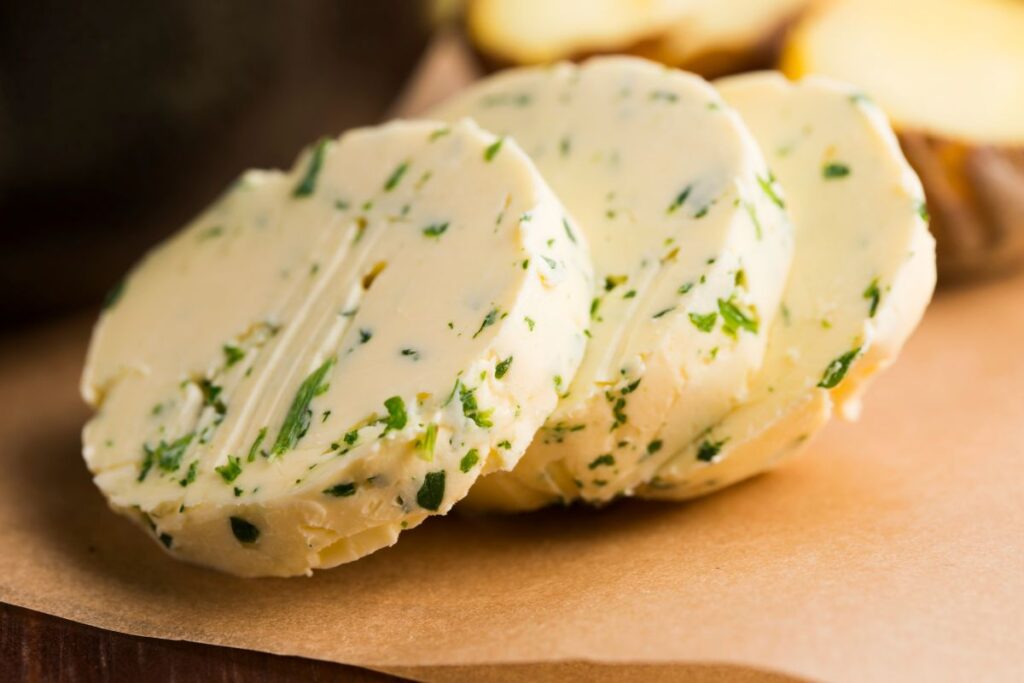
Compound Butter
The herb filling is nothing more than an herb butter — an equal mixture of softened salted butter and fresh minced herbs. Simple and incredibly flavorful.
This is something I actually do every summer: as herbs come in fresh, I make herb butter in different combinations and freeze it in logs, then store those in freezer bags. When winter hits and the garden is long gone, I pull out a log, let it thaw at room temperature, and use it to make this bread. It’s one of the best ways I’ve found to preserve that summer herb flavor well into the colder months.
Obviously the butter can also be made on the fly and used immediately — but if you find yourself with an herb surplus, the freezer method is worth trying.
The Shape
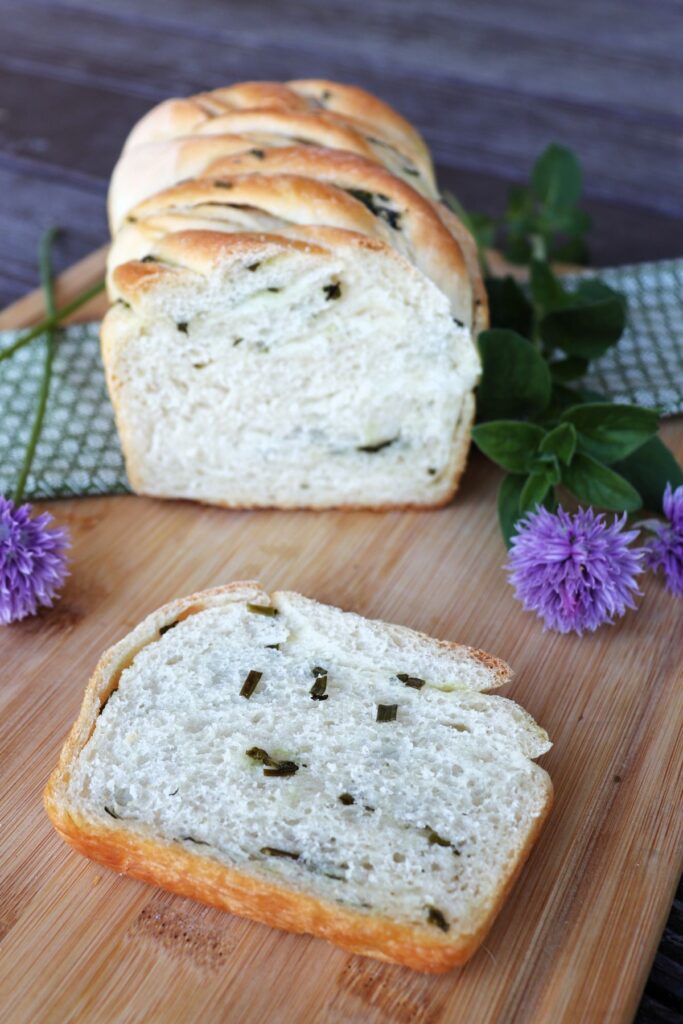
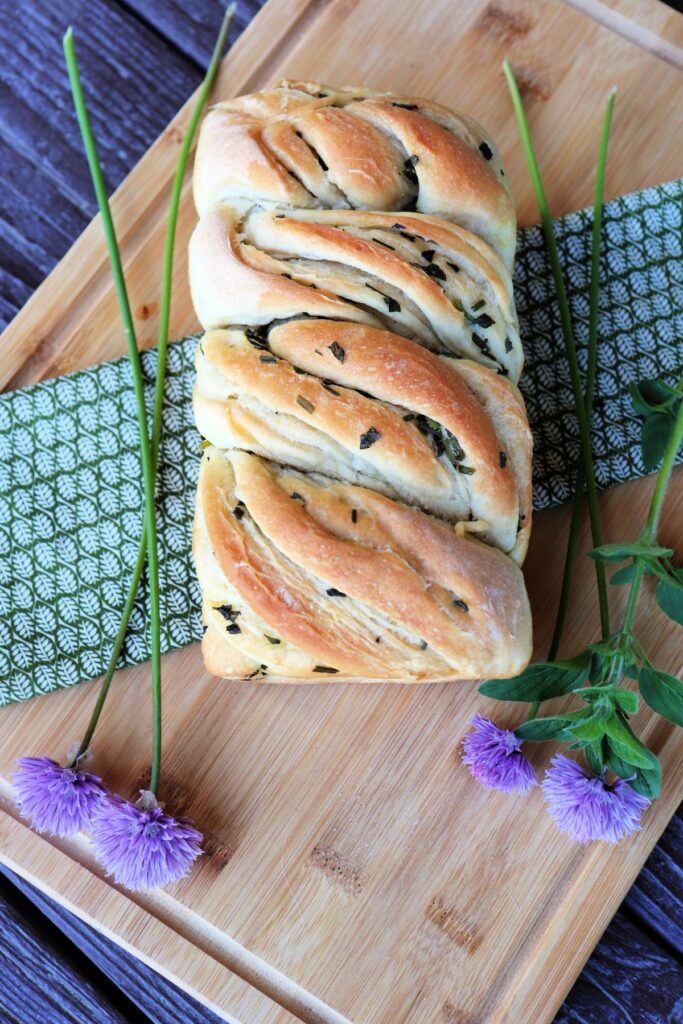
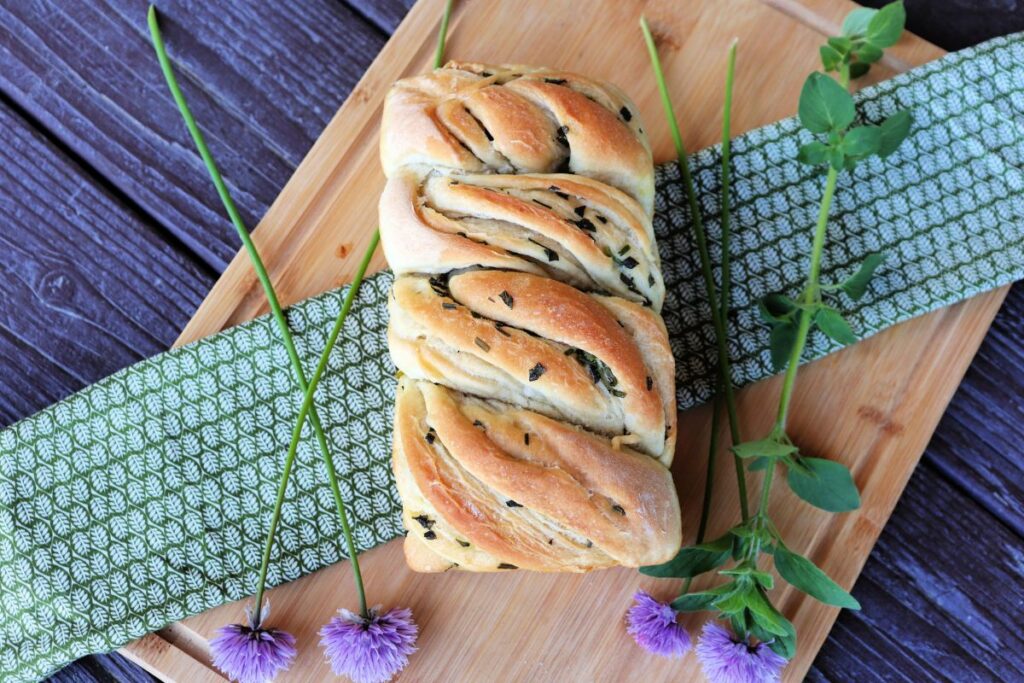
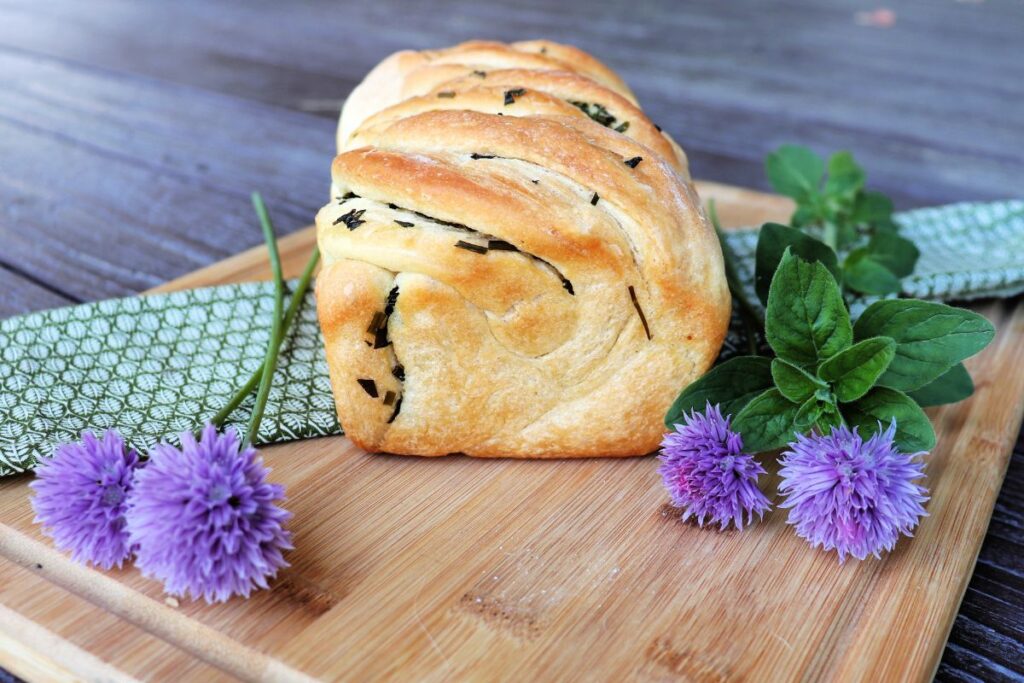
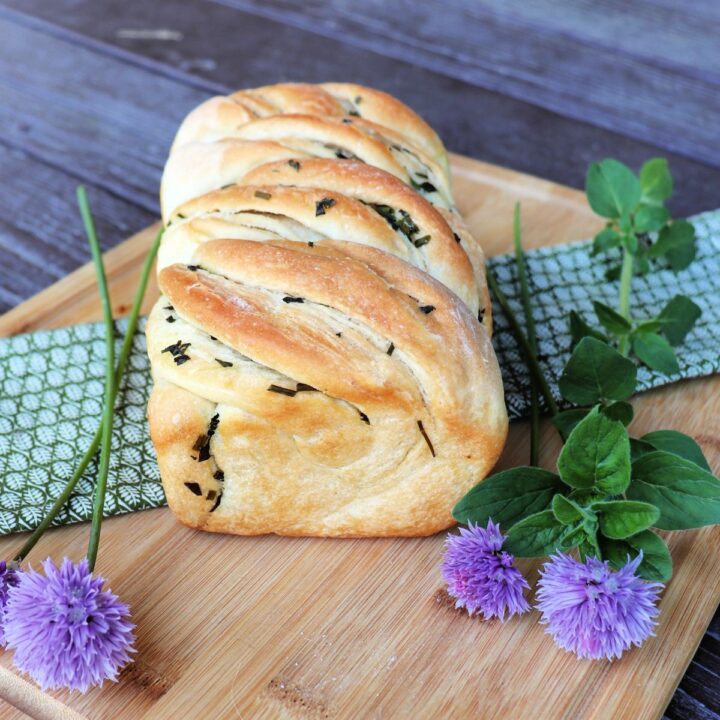
I went with a twisted bread loaf simply because I love how those look and I knew that the bits of green herbs peaking through would be especially beautiful.
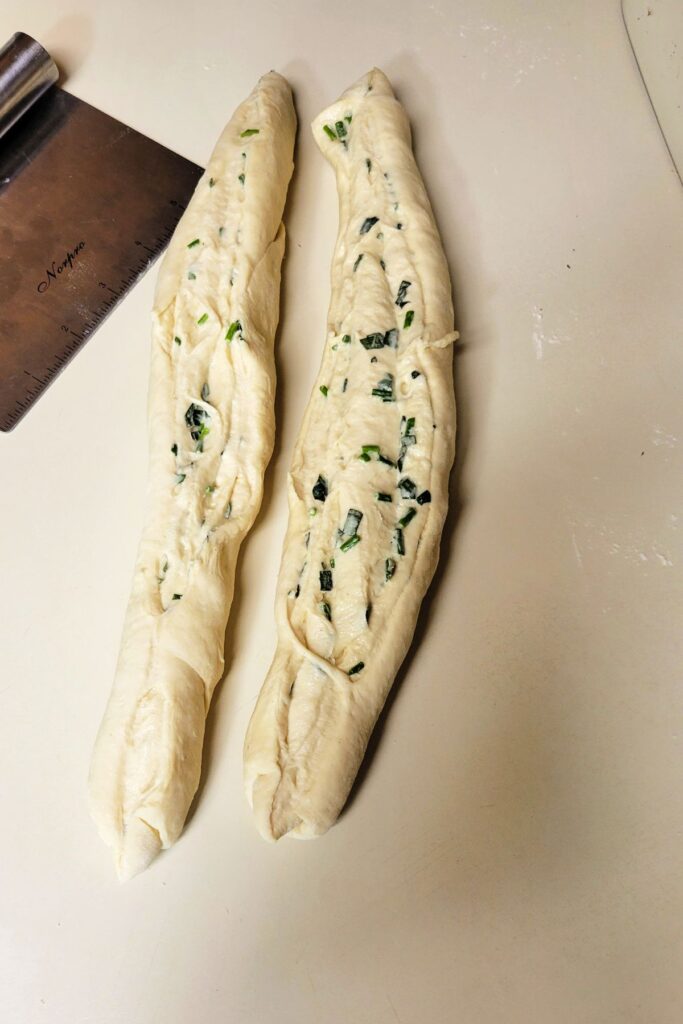
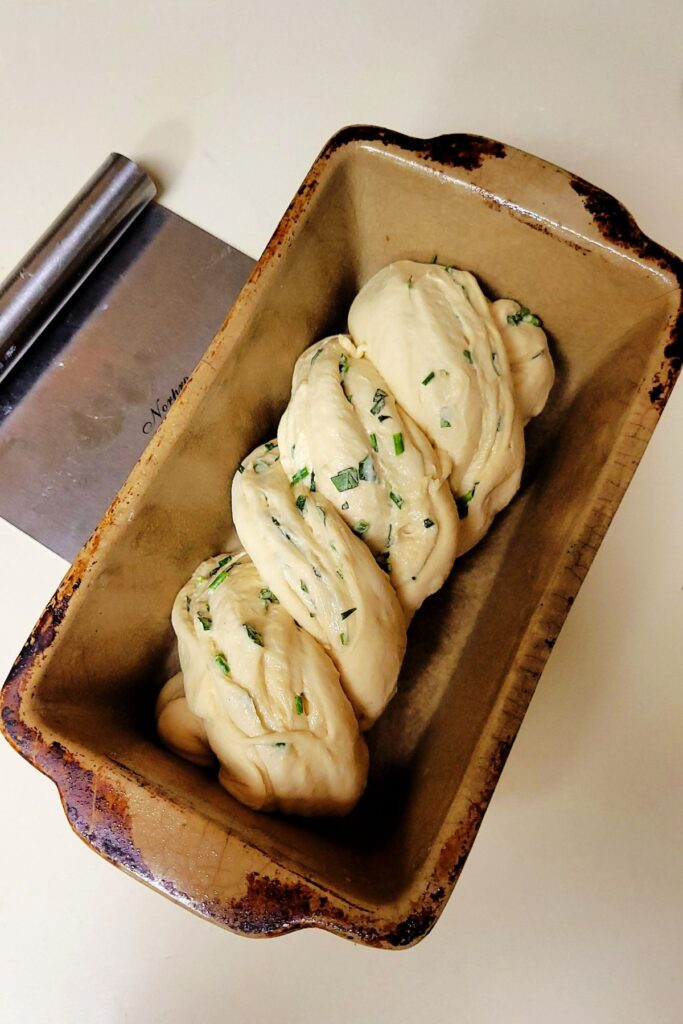
To achieve this, roll up the dough after it’s been filled like you would for any swirl bread or cinnamon rolls.
Then slice that roll in half the long way, exposing the layers inside.
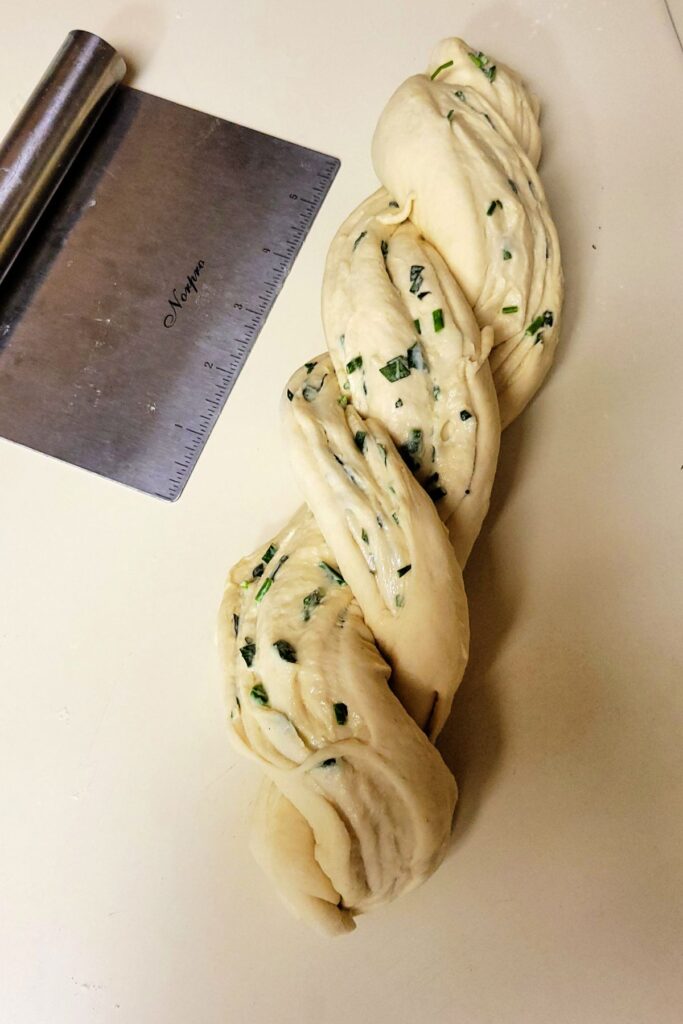
Place the two halves next to each other and simply twist them around one another, pinching the ends to keep it sealed.
Put that twist into the prepared pan, let rise, then bake.
Don’t want to do a twist? You don’t have to. Simply leave it like a loaf of cinnamon swirl bread and bake it up.
Flour Choices
I went with basic all-purpose flour in the original recipe. It’s easy and works perfectly.
Bread flour could easily be substituted, if preferred.
Make it whole grain by using some whole wheat flour or even rye for some of the all purpose flour.
As always, remember that different flours absorb water differently so add flour slowly until it reaches that elastic stage.
Liquid Choices
I went with water here. It’s easy, of course, but also provided the lightness in texture that I was after.
Want something richer and denser? Use warm milk instead of warm water.
Use half water and half milk for something in between and completely delicious.
The Garlic
I added minced garlic straight to the bread dough because I think it infuses the entire loaf with flavor in a way that isn’t overpowering at all.
Feel free to add it to the herb butter instead, if you want the flavor layered differently.
The garlic can also be skipped if someone doesn’t like it or can’t eat it for some reason.
Other Additions
The recipe is great as written but there are some ways that you can switch it up if desired.
We quite like a bit of fresh cracked black pepper added in the herb butter. Go for that if desired.
Add up to a cup of shredded cheese to the bread dough for cheesy herb bread.
Sprinkle some parmesan cheese over the herb butter before rolling it up for an extra bit of cheese and flavor.
Add 2 Tablespoons of poppy seeds for extra flavor and crunch.
If you love savory filled breads, my Cheddar Bacon Rolls and Cheesy Pesto Rolls are both worth trying for the same satisfying idea in a fun roll shape.
Experience Level: Beginner
This is a basic bread recipe with just a little switch up in the filling. Most beginning bakers can feel confident in having success with this as one of their first bread recipes.
The twist shape might feel a little intimidating but is honestly, not that hard and could be skipped until more skill is gained.
Troubleshooting
The herbs turned dark or look unappetizing after baking. This is normal for some delicate herbs like basil that darken when exposed to heat. It doesn’t affect flavor, but if appearance matters to you, choose hardier herbs like rosemary, thyme, or chives which hold their color better through baking.
The butter leaked out during baking. Make sure to leave about ¼ inch of bare dough around the edges before rolling, and roll tightly. Some leakage is normal and will caramelize on the pan.
The twist came apart in the oven. Pinch the ends firmly together before placing in the pan, and make sure the seam side is tucked underneath. The loaf will expand during baking so a snug fit in the pan helps hold the shape.
The dough is dense and heavy. Too much flour or over-kneading are the most common causes with this style of enriched dough. Add flour gradually and stop as soon as the dough is soft and smooth.
The bread didn’t rise well. Check that your yeast foamed properly in the first step — if it didn’t, start with fresh yeast. Also make sure your rise location is genuinely warm; a cool kitchen will slow things down significantly.
The center is gummy or undercooked. Herb breads with butter fillings can take slightly longer to bake through than plain loaves. If the top is golden but the center seems underdone, tent with foil and bake another 5–10 minutes. The internal temperature should reach 190–200°F when fully baked.
How to Serve
Like all savory bread recipes, this loaf goes well with soup and salad meals.
It’s a great bread with many pasta dishes, too. Heck, I can’t think of a savory meal that it wouldn’t make better.
Slices definitely work as a sandwich bread.
It works perfectly for grilled cheese sandwiches.
Thick slices could be turned into toasted garlic bread for something extra flavorful.
How to Store
Keep fresh bread in an airtight container or plastic bag for up to 4 days for maximum freshness.
For longer term storage, place baked and cooled loaves in freezer bags and freeze.
Let frozen bread thaw at room temperature prior to serving.
Use up frozen bread within 6 months for best flavor.
Have frozen herb butter on hand? Pull it from the freezer, let it thaw at room temperature, and you can have this bread going any time of year — no fresh herbs required.
Fresh Herb Bread Recipe
Make this flavorful and buttery bread for the perfect side dish to soups, salads, and more.
Ingredients
Bread Dough
- 1 1/2 teaspoons Active Dry Yeast
- 1 teaspoon Sugar
- 1 Cup Warm Water
- 1 teaspoon Salt
- 3 Cloves Garlic, minced
- 2 1/2 Cups Unbleached, All Purpose Flour
Herb Filling
- 1/4 Cup Salted Butter, Softened
- 1/4 Cup Fresh Herbs, minced
Instructions
Make the Bread Dough
- In a large bowl, combine the yeast, sugar, and water. Let sit until foamy, about 5-10 minutes.
- Add 1 cup flour, salt, and minced garlic to the yeast mixture. Mix until well combined.
- Stir in another cup of flour and mix. Add more flour as necessary to form a soft dough.
- Turn the dough out onto a floured board and knead until soft and elastic.
- Grease a bowl and place dough inside, turning to coat.
- Cover the bowl with a towel and let dough rise until doubled in a warm place about 45 minutes to an hour.
Make the Filling
- Cream together the butter and herbs until soft and completely combined. Beat it all well.
- Set Aside.
Finish the Bread
- Grease a loaf pan.
- Punch down the dough and turn out to a floured surface.
- Knead the dough just slightly.
- Using a rolling pin, roll dough out to an 11X9 inch rectangular - approximate doesn't need to be exact.
- Spread the filling evenly onto the dough.
- Roll the dough from the short end tightly.
- Cut the dough log in half lengthwise, exposing the herb layers.
- Twist the halves together and pinch ends together.
- Place the twist into the prepared bread pan.
- Cover with a clean towel and let rise in a warm location until doubled, about 30 minutes.
- Meanwhile, preheat oven to 350 degrees Fahrenheit.
- When risen, place pan in the preheated oven and bake for 40 to 45 minutes or until the top is golden brown and the bread sounds hollow when tapped with a knuckle.
- Place the pan on a wire rack and let bread cool in the pan for 15 minutes.
- Remove bread from the pan and let cool completely on the cooling rack.
Nutrition Information:
Yield: 12 Serving Size: 1Amount Per Serving: Calories: 133Total Fat: 4gSaturated Fat: 2gTrans Fat: 0gUnsaturated Fat: 1gCholesterol: 10mgSodium: 208mgCarbohydrates: 21gFiber: 1gSugar: 0gProtein: 3g
I try but cannot guarantee this nutritional information is 100% accurate.

Leave a Reply