

Make this sauerkraut bread for a delicious and hearty sandwich bread perfect for cured meats and more.
I love sauerkraut and rye together. The tangy, earthy combination is one of my favorite flavor pairings in bread baking, and this loaf brings both together in a deeply flavorful yeasted bread that is especially wonderful for Reuben sandwiches. It is not a sourdough despite the fermented ingredient. Just a well-flavored, satisfying homemade loaf with a long but mostly hands-off process.
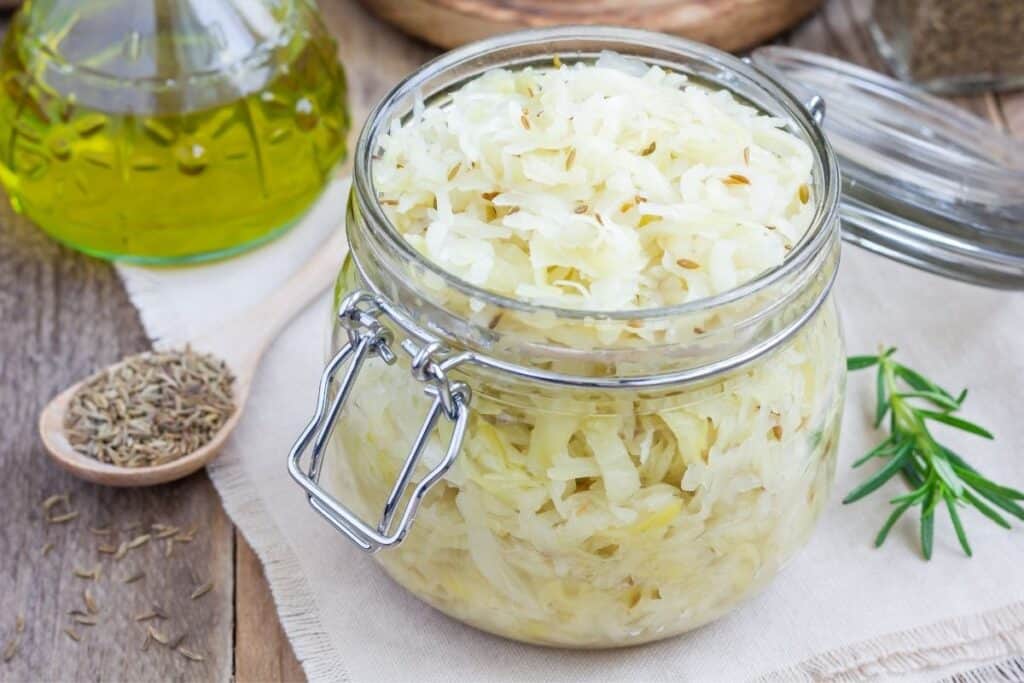
Sauerkraut
The recipe includes sauerkraut in the bread dough. Yes, I know cooking sauerkraut kills the probiotics. The sauerkraut provides an amazing flavor to the finished bread.
The flavor is not so strong, however; that someone will instantly know sauerkraut is in the bread if they weren’t told ahead of time.
I used a raw, refrigerated sauerkraut made by a local Hutterite colony in this recipe. I’m sure any homemade or other refrigerated sauerkraut would work. The canned variety would also likely work but it’s never been my favorite for flavor.
Do drain and chop the sauerkraut before adding it to the bread dough. Too much extra brine is likely to throw off the flour to water ratio and be quite salty.
Rye Flour
I used a medium rye flour in the recipe. Simply because that was what I had on hand. Dark or light rye would also likely work. Even pumpernickel would probably work – but beware that you might need more or less bread flour because of how water is absorbed.
If you love baking with rye flour, my Rye Bread Recipe is a great everyday loaf worth trying.
Seeds
Caraway seeds are quite traditional in rye breads. They’re also quite flavorful with sauerkraut in my opinion.
Dill seeds too are traditional in rye and a wonderful complement to sauerkraut.
It’s for that reason that I used a combination of both seeds in the bread.
However, you could easily skip the seeds all together or use just one based on preference. There’s really no right or wrong here.
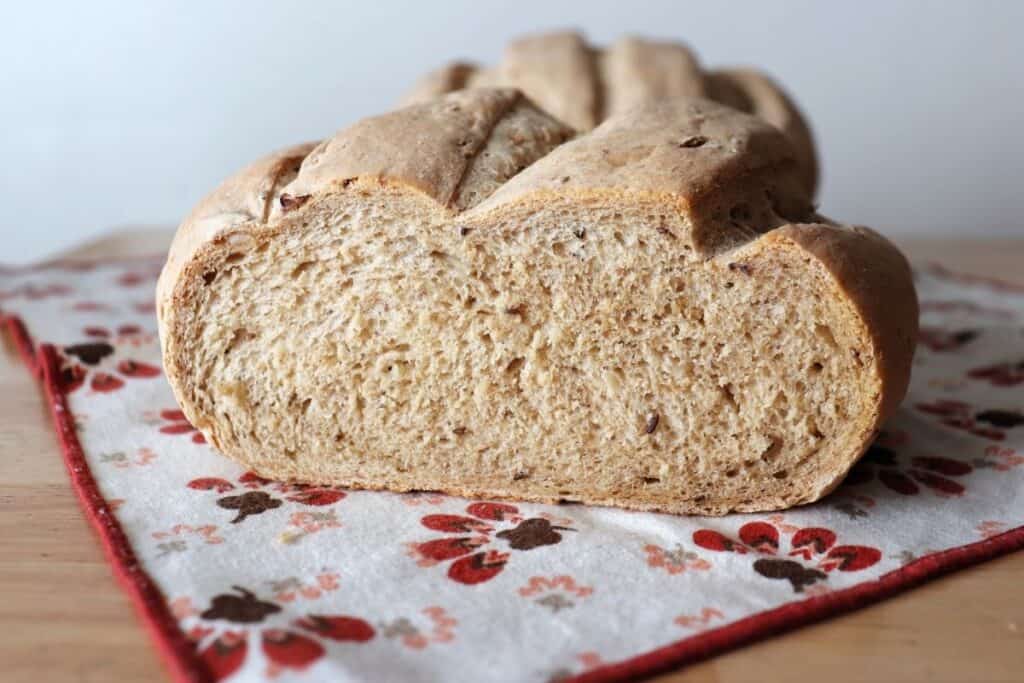
Sponge Method
This recipe uses the sponge method of allowing the whole grain flour, some water, and yeast sit for a while before proceeding. In this case, the sponge needs to ferment for 3 1/2 hours.
This makes the time to make this bread obviously quite long. This isn’t very difficult and it’s hands on time but don’t rush it. This pre-ferment of the sponge gives extra flavor and texture to the final loaf.
Bread Shape
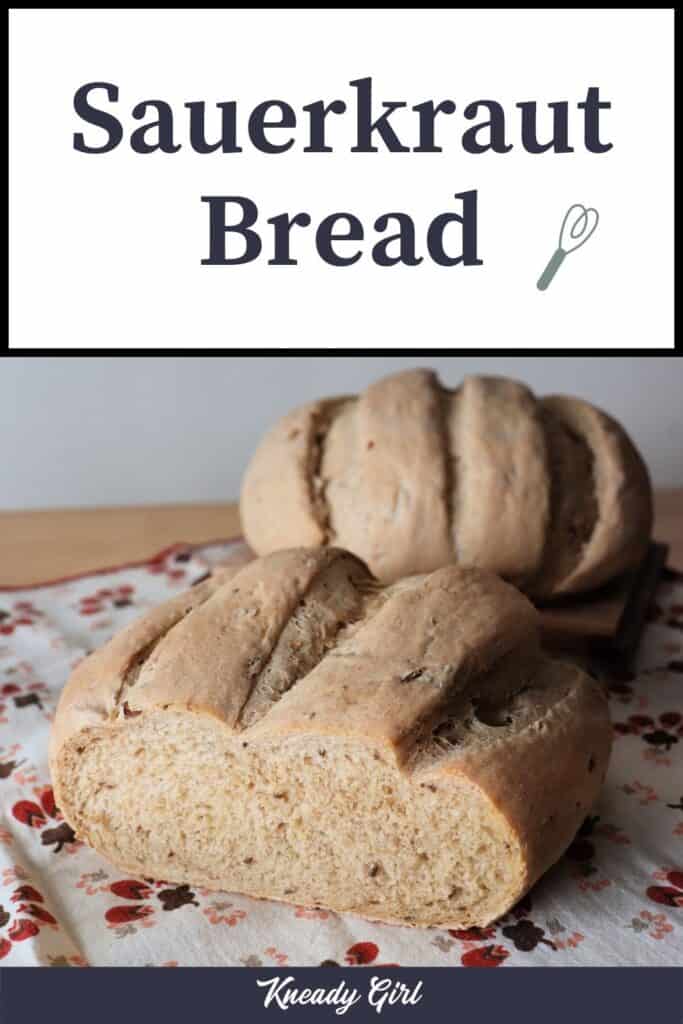
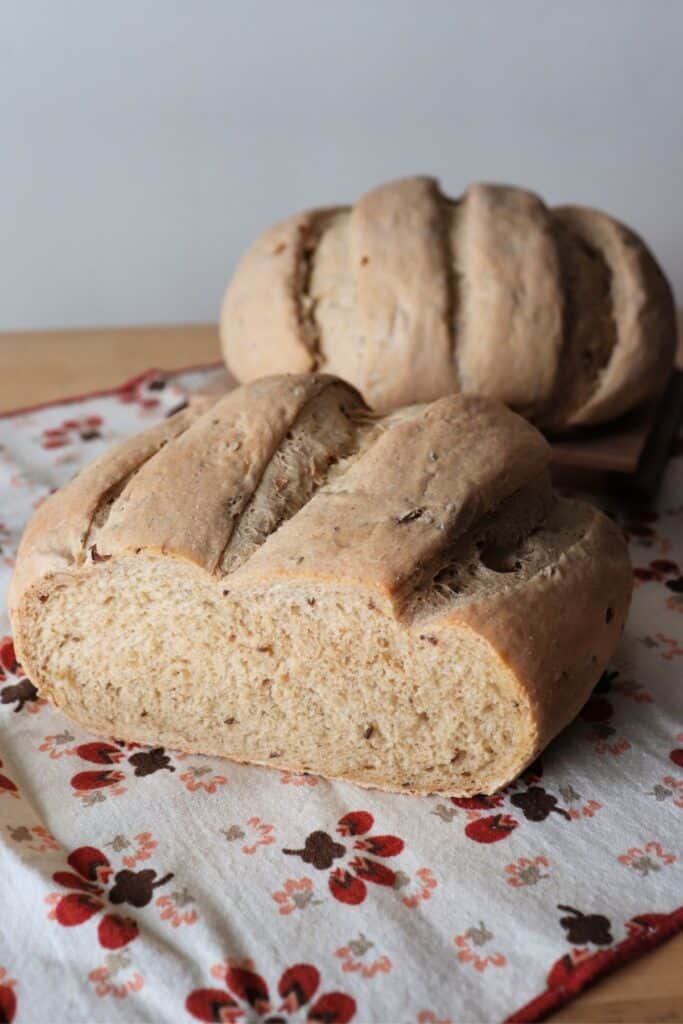
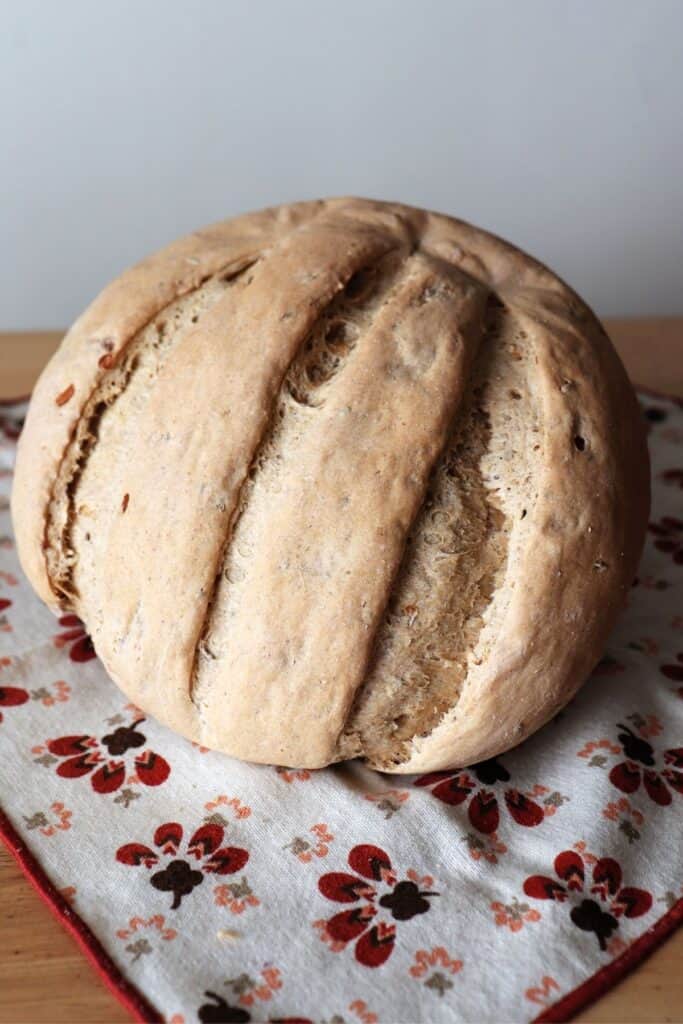
I went for round loaves here just because it was what I fancied. Feel free to bake in loaf pans if desired.
Troubleshooting
The dough is very sticky. Sauerkraut adds moisture to the dough. Add bread flour a tablespoon at a time until the dough is manageable, stopping as soon as it comes together into a soft, slightly tacky ball. Don’t add too much or the bread will be dry.
The bread is too salty. Make sure the sauerkraut is thoroughly drained before chopping and adding to the dough. Giving it a gentle squeeze in a clean kitchen towel removes even more brine.
The bread didn’t rise well. Check that your yeast foamed properly at the start. Also make sure the sponge fermented for the full 3½ hours — rushing this step will result in less flavor and potentially a weaker rise.
The loaf is dense. Some density is expected with rye flour. If it feels brick-like rather than pleasantly dense, too much rye or too much flour in the final dough are the most likely causes. Make sure you’re adding bread flour gradually and stopping when the dough is soft and elastic.
The crust is too thick or hard. This is a rustic bread with a naturally sturdy crust. If you prefer a softer crust, brush the hot loaves with butter immediately after removing from the oven and tent with a clean kitchen towel while they cool.
How to Use Sauerkraut Bread
This bread is ideal for homemade Reuben sandwiches. It’s just an extra layer of flavor that makes everything pop quite well. We’ve used it for everything from tuna sandwiches to grilled cheese in our home with great success.
I wouldn’t use it for a peanut butter and jelly sandwich or french toast but definitely recommend it for any of strong, savory sandwich filling.
How to Store
Store the cooled loaves in an airtight container or bag at room temperature for up to 4 days.
For longer term storage, wrap the cooled loaf in plastic wrap and freeze, or slice and place slices into a freezer bag. Let frozen bread thaw on the counter before serving. Use within 6 months for best flavor.
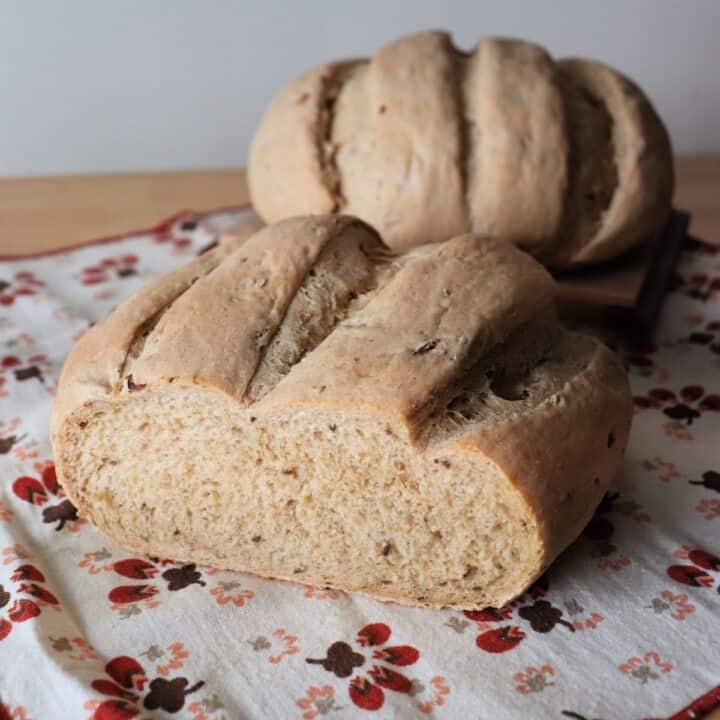
Sauerkraut Rye Bread Recipe
Hearty and tangy sauerkraut bread is a perfect savory sandwich loaf bread.
Ingredients
Rye Sponge
- 1 Cup Warm Water
- 1 Tablespoon Molasses
- 1 Tablespoon Dry, Active Yeast
- 1 Cup Medium Rye Flour
Remaining Bread Dough
- 1 Cup Warm Water
- 1/2 Cup Sauerkraut, drained & chopped
- 1 Tablespoon Caraway Seeds or Dill Seeds, or a mixture of both
- 1 teaspoon Salt
- 4 Cups Bread Flour
Instructions
Make the Sponge
- In a large mixing bowl, combine the yeast, molasses, and warm water. Stir gently just to combine.
- Let sit for about 10 minutes or until foamy.
- Stir in the rye flour completely.
- Cover the bowl with a tea towel and let ferment for 3 1/2 hours.
Finishing the Bread Dough
- Add the water, chopped sauerkraut and seeds to the sponge. Stir well.
- Stir in 1 cup of bread flour and add the salt, mixing well.
- Add another 2 cups of bread flour and continue to mix until it begins to form a soft, together ball of dough. You may need to add another cup or so of bread flour.
- Knead the dough until it is soft and elastic. It might still be a bit sticky.
- Place the dough into a greased bowl and turn to coat.
- Cover the bowl with a towel and let rise until doubled about 1 hour.
- Punch down the dough and knead slightly.
- Divide the dough into 2 equal halves and form round loaves.
- Place the loaves onto a greased baking sheet or let rise in baskets to bake on a stone later.
- Cover the baking sheet with a towel and let rise again for 45 minutes.
- Preheat the oven to 400 degrees Fahrenheit.
- Slash the dough if desired with a razor before placing into the preheated oven.
- Bake for 40 minutes or until golden and sounds hollow when tapped with a knuckle.
- Remove from baking sheet to cool completely on wire racks.
Nutrition Information:
Yield: 24 Serving Size: 1 sliceAmount Per Serving: Calories: 103Total Fat: 1gSaturated Fat: 0gTrans Fat: 0gUnsaturated Fat: 0gCholesterol: 0mgSodium: 116mgCarbohydrates: 21gFiber: 1gSugar: 1gProtein: 3g
I try but cannot guarantee this nutritional information is 100% accurate.

I’ve made something similar before. My husband loves Rueben’s, but he hates the mess of the sauerkraut juice dripping out. So I decided to make a rye bread with the sauerkraut baked into it. I used 2 standard sized cans of sauerkraut. I drained the juice into the measuring cup and used the juice in place of the water. Added the caraway seeds, because how can it be a Rueben without the classic rye flavor?
Throwing the sauerkraut juice away instead of incorporating it into the recipe is silly. The juice is what retains most of the flavor. If you don’t want the sauerkraut flavor or are looking for something more subtle, then don’t make sauerkraut bread.
The sauerkraut juice can often be quite salty – too salty for some folks and in some cases even inhibit the growth of the yeast, hence my suggestion for draining it but everyone is free to do their own thing.